 Potomac Hills began in 1990 as a small group of Christians meeting during Sunday afternoons in the living room of Mark and Phoebe Rist in Leesburg, Virginia. Their desire was to advance the Gospel, to extend the Kingdom of God in the Leesburg area, and in due course to establish a church in the Presbyterian Church in America (PCA).
As they sensed God's call to begin meeting for worship on Sundays, they used different venues such as the Colonial Funeral Home of Leesburg and the Seventh Day Adventist Church of Leesburg. An evangelist named John Barber filled the pulpit often.
In June 1992, the mission church called Wade Smith to be their pastor fresh out of seminary. Wade led them in a phone-a-thon to invite the community to a grand opening at our new location at Ashburn Elementary School in December 1992. Potomac Hills was officially recognized as a particular church of the PCA on October 2, 1994.
In June 1995, God called Wade to start a new church in Utah. The pastor search committee called Rev. Dave Silvernail in January 1997 and he has been the senior pastor ever since.
Some other highlights:
*We moved to our current location at Harper Park Middle School after the school opened in 1999.
*Dave Dorst was hired as the youth and worship pastor in February 2002, and served until March 2020.
*In May 2006, we changed our name from Potomac Hills Community Church to Potomac Hills Presbyterian Church to more accurately reflect our identity.
*Rev. Dave Crenshaw and Rev. Rich Coffeen both served as part-time pastors between the years of 2005-2011.
*We had our first campaign drive to raise money for what was initially called the "Multiply Ministry Initiative" in the Fall of 2010. Preaching through the book of Esther, the motto of the campaign became "For Such A Time As This" and resulted in members pledging (and giving) over $530,000 during the three years of the campaign. The campaign came to a close at the end of 2013, and it was wonderful to see how faithful the congregation was and seeing what God brought: many new families, two new pastors, a renovated office, and new ministries.
*Rev. Tom Rubino and Rev. Jeff Lee both served on staff from 2012-2015.
*Rev. Frank Wang was hired in 2016 as the Assistant Pastor for youth, college, and young adults.
*Rev. Dorst moved on to a Senior Pastorate position at another church; Thomas Gardner and Eli Rist were hired as Music Directors.
*COVID closed our doors temporarily in 2020, and our livestream was born! We re-opened for in-person worship in June 2020, and our livestream still runs every Sunday for those who are sick, out of town, or new visitors who want to see what we're like.
*Rev. Wang became our Associate Pastor in 2021.
About Our Logo
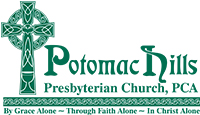
Historically, the cross of the Presbyterian Church is the Celtic Cross. This cross serves as a reminder of our historical roots, dating back to the early church, through the Protestant Reformation, and on to the great missionary movements to bring the Gospel of God’s Grace to the whole world. We are reminded that today, we are called to be a missional church, true to our heritage, but relevant to the world in which we find ourselves.
This cross communicates important things:
- The cross itself is a symbol of the Gospel of Jesus Christ. The cross reminds us that God’s love and life are ours to enjoy because of Christ’s sacrificial death on the cross in our place. It also reminds us that the message of the Gospel is at the center of our calling as a church, and that we exist to invite others to share in this fellowship with Christ.
- The circle behind the cross is a symbol of God’s eternal being, power, and unending glory. The symbol on the ends of the cross (called a Triquetra) is an ancient symbol of the Trinity. The dove in the center represents the Holy Spirit. The chalice (or cup) at the bottom of the cross represents the Sacraments given to us by Christ as means of grace.
- The scrollwork underneath the cross is probably the most recognizable element of Celtic artwork. It reminds us that we are linked together, as the life we have in Christ is to be lived out in community, loving one another, praying for one another, and encouraging one another on a regular basis.
This cross was used by Christians in the Middle Ages to clearly communicate Christ against the pagan culture of the day. When these early missionaries would enter a new area, they would plant one of these crosses in that place or carve one of these crosses into Runes (ancient stones), thus claiming the people of that area for Christ and announcing that the Gospel has come to that place. It was a deliberate and conscious testimony to the power of the Gospel to change people and places that were originally deeply hostile to Christ and His Church.
This cross is a needed symbol for us today as we are here to communicate Christ and His Word to a postmodern culture that is increasingly hostile to Christ, His Word, and His Church. May God use this symbol to further His Kingdom.